Cozy Game About Dying?
In the past, video games treated death as the ultimate failure. It was accompanied by flashing red screens, a loss of progress, and a booming “GAME OVER.” Today, a radically different genre has taken over the indie gaming landscape: the cozy game about dying. Led by critically acclaimed masterpieces like Spiritfarer, A Short Hike, and Cozy Grove, these games blend soothing management loops with profound narratives about loss, legacy, and saying goodbye. But why are players suddenly flocking to games that make them cry? And as the market becomes saturated, is this unique sub-genre actually declining, or is it stronger than ever?
Here is an analytical look at the mechanics, psychology, and market health of gaming’s most comforting paradox.
1. What Exactly is a “Cozy Game About Dying”?
The sub-genre is defined by a unique juxtaposition: it takes the mechanics of a life simulator (farming, fishing, crafting, and cooking) and applies them to the afterlife.
Instead of fighting monsters to save the world, your primary objective is to comfort spirits, listen to their life stories, and help them find the closure required to pass on.
Core Gameplay Characteristics
- Low-Stakes Loop: No health bars, no stressful timers, and no punitive failure states.
- Radical Empathy: Progression is tied to emotional labor—cooking a spirit’s favorite meal, decorating their living space, or offering a literal hug.
- Atmospheric Solace: Heavy reliance on melancholic yet beautiful orchestral soundtracks, watercolor aesthetics, and gentle environmental storytelling.
2. The Statistics: The Massive Reach of Grief Gaming
To understand the power of this genre, you only need to look at the commercial and critical milestones. These are not niche titles; they are heavy-hitting indie powerhouses.
- Spiritfarer (Thunder Lotus Games): Widely regarded as the pioneer of the genre, the self-described “cozy management game about dying” has surpassed 3 million copies sold globally and boasts a 95% “Overwhelmingly Positive” rating on Steam.
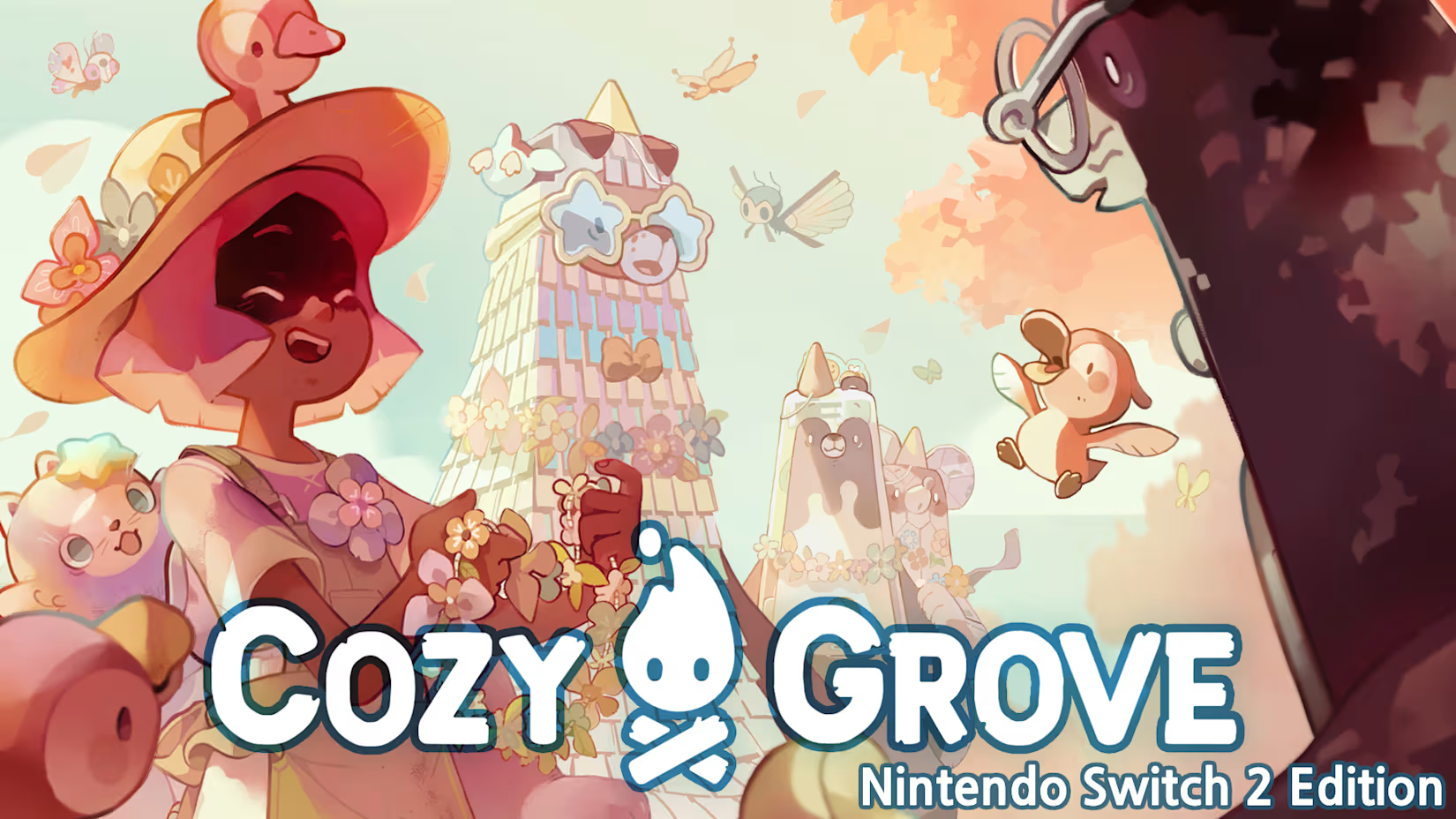
- Cozy Grove (Spry Fox): A game where you play as a Spirit Scout comforting ghostly bears, it generated enough massive engagement to prompt Netflix Games to acquire the studio and launch Cozy Grove: Camp Spirit.
- What Remains of Edith Finch (Giant Sparrow): While more of a walking simulator than a management game, this poetic exploration of a family curse won the BAFTA for Best Game and has introduced millions of mainstream players to narrative-driven mortality.
3. The Psychology: Why We Seek Comfort in Sadness
Psychologists and game researchers note that these games fulfill a profound therapeutic need, particularly in the post-pandemic era.
The Catharsis Factor
Traditional media often portrays death with abrupt tragedy or terrifying horror. Cozy games about dying offer controlled catharsis. They provide a safe, digital sandbox to process real-world grief and existential anxiety. By engaging in repetitive, soothing tasks—like harvesting wheat or chopping wood—the player’s brain is anchored in a comforting routine while absorbing heavy emotional themes at their own pace.
Market Analysis: Is the Genre Declining or Just Evolving?
As with any major trend, when a genre blows up, storefronts get crowded. Some industry commentators have suggested that players are experiencing “cozy fatigue” and that the “cozy game about dying” is on the decline.
Is this true, or is it just an opinion?
The Argument for Decline (The “Opinion”)
Skeptics point out that the market is flooded with Spiritfarer clones that fail to capture the same emotional magic. Critics argue that adding a “ghost” to a standard farming simulator has become a lazy narrative trope, causing players to look elsewhere for original experiences.
The Data for Growth (The Reality)
The numbers and industry movements suggest the genre is not declining; it is evolving.
- Major Studio Investment: Industry giants are aggressively investing in these spaces. Netflix’s acquisition of Spry Fox proves that mega-corporations see long-term retention value in comforting, narrative-focused death simulators.
- The “Steam Deck” Effect: Handheld PCs and the Nintendo Switch have given these games a massive, continuous long-tail sales cycle. They are highly evergreen; players buy them years after launch because they are perfect for bedtime gaming.
- High Critical Demand: At major indie showcases, titles centering on ancestral trauma, ghosts, and afterlife management consistently rank among the most wishlisted games on Steam.
Verdict: Market Maturation, Not Decay
The genre isn’t shrinking; the barrier to entry is just higher. Players are no longer buying a game just because it features a cute ghost. They demand the mechanical depth of Stardew Valley paired with the writing quality of a prestige television drama. The weak titles are fading away, but high-quality grief games are still breaking sales records.
Essential “Cozy Death” Games Quick-Comparison
| Game | Core Loop | Emotional Tone | Average Playtime |
| Spiritfarer | Boat Building & Cooking | Bittersweet, Deeply Emotional | 30–40 Hours |
| Cozy Grove | Real-time Crafting & Hidden Object | Whimsical, Quirky, Daily | 40+ Hours (Over Months) |
| A Short Hike | Exploration & Light Platforming | Uplifting, Gentle, Peaceful | 2–3 Hours |
| Bear’s Restaurant | Diving into Memories via Food | Melancholic, Thought-Provoking | 4–5 Hours |
The Future of Finding Calm in the End
The “cozy game about dying” succeeded because it filled a void that traditional, high-adrenaline gaming ignored. It proved that players want to feel more than just a rush of dopamine from a victory royale—sometimes, they want a quiet space to feel human.
As long as life remains stressful and unpredictable, the digital ferrymasters of gaming will always have a line of players waiting to climb aboard.